

China Top 10 Slim Profile Aluminum Manufacturers

China’s Slim Profile Aluminum industry serves construction, furniture, lighting, transport, and precision engineering markets. This guide examines ten leading manufacturers associated with narrow, lightweight, and visually refined aluminum solutions. It focuses on practical capabilities rather than marketing claims alone.

The evaluation considers extrusion capacity, alloy options, dimensional control, surface treatment, tooling support, and delivery experience. Factory automation matters, but experienced technicians still influence difficult profiles. A clean die room, organized billet storage, and consistent inspection records reveal valuable details. Quality certificates, testing reports, export experience, and customer references also strengthen supplier credibility. However, published information can change.

No list is perfect.

Manufacturers may excel in different areas. One supplier could offer advanced anodizing, while another may provide faster tooling development. Some are better suited to architectural projects. Others support customized industrial components or high-volume orders. Buyers should confirm tolerances, minimum quantities, packaging methods, and production schedules before signing agreements. Independent sample testing remains sensible, especially for projects requiring stable appearance and tight dimensional performance.

This introduction provides a practical framework for understanding China’s Top 10 Slim Profile Aluminum Manufacturers. It does not replace direct supplier verification. Company rankings should be treated as a starting point, not a final judgment. Market conditions, factory investments, and service quality can shift over time. That uncertainty deserves attention.
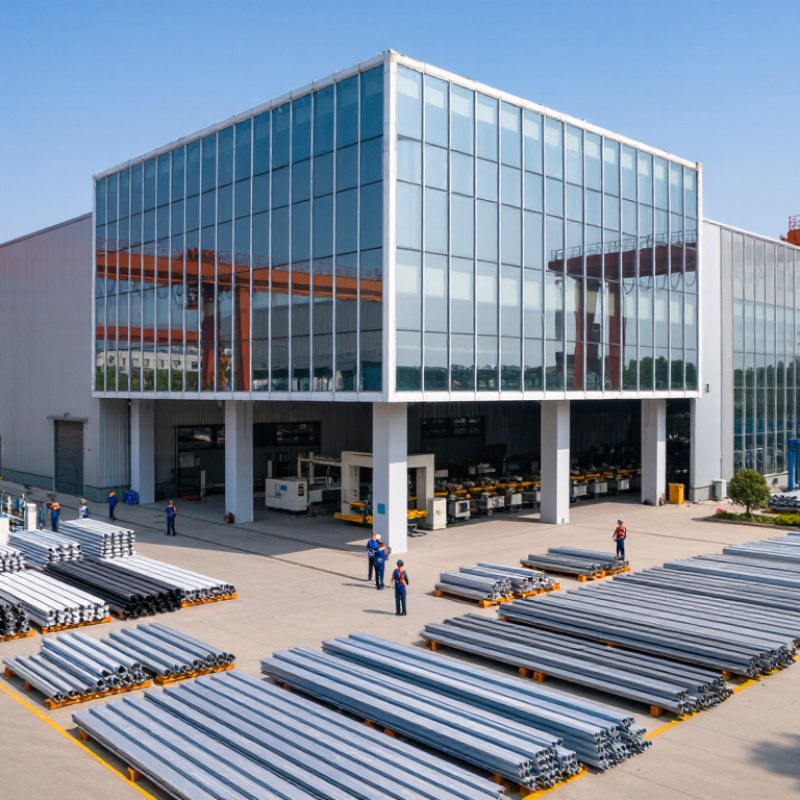
China Top 10 Slim Profile Aluminum Manufacturers

Definition and Features of Slim Profile Aluminum

Slim profile aluminum refers to aluminum sections designed with narrow sightlines, reduced wall thickness, or compact cross-sections. These profiles create a clean appearance without making the structure feel heavy. They are common in doors, windows, partitions, cabinets, and lightweight frames.

In practical production, designers often choose slim profiles for better daylight and smaller visual gaps. Aluminum also resists corrosion and offers a useful strength-to-weight ratio. However, thinner does not always mean better. A profile must still handle wind pressure, hardware loads, drainage, and repeated opening. Alloy grade, temper, extrusion accuracy, and surface treatment can strongly affect performance. I have seen attractive sections fail when the connection details were treated as an afterthought.

Tips: Check the profile drawings before ordering. Ask about alloy, wall thickness, tolerances, and testing data. Review corners, seals, and fasteners as one system. A sample cut section can reveal weak ribs or uneven coating. Do not judge quality from appearance alone. Sometimes, a slightly wider profile provides safer strength and easier installation.

How China’s Slim Profile Aluminum Manufacturing Industry Developed

China’s slim profile aluminum industry grew alongside wider changes in construction, transport, and consumer electronics. Earlier production often focused on standard sections and larger structural components. As demand shifted toward lighter frames and cleaner lines, manufacturers invested in more precise extrusion dies, improved alloy control, and tighter dimensional checks. A narrow window frame, for example, needs consistent wall thickness to fit glass and hardware without excessive adjustment.

The process became more capable. Yet development was not evenly paced. Some factories adopted automated cutting and surface inspection, while others relied more heavily on manual checks. Better equipment helped reduce variation, but it did not remove the need for skilled operators. Small changes in temperature, billet quality, or die wear can affect a profile’s finish and strength. Details matter.

Today, manufacturers commonly support custom cross-sections, anodized finishes, and powder-coated surfaces for different applications. These options make slim profiles more practical, though design choices still need testing against load, weather exposure, and installation conditions. A thinner edge may look refined on a drawing but prove difficult to assemble on site. That gap deserves attention. The industry’s next gains depend not only on faster production, but also on clearer specifications, reliable testing, and feedback from installers.

China’s primary aluminum output increased substantially from 2014 to 2023, supporting the expansion of downstream extrusion capacity, including slim profile aluminum for architecture, transport, electronics, and industrial applications. The broader production trend indicates the scale of the domestic supply base, although it does not represent the output of any individual manufacturer.

Source: U.S. Geological Survey Mineral Commodity Summaries and International Aluminium Institute historical production statistics; values shown in million metric tonnes and rounded.

Selection Criteria for the Top 10 Chinese Manufacturers

Selection Criteria for the Top 10 Chinese Manufacturers

A slim-profile aluminum supplier should be assessed on more than catalog dimensions. The International Aluminium Institute reported global primary aluminum production of about 70.6 million tonnes in 2023, reflecting a large, resource-intensive industry. That scale makes process control important. Ask manufacturers for extrusion tolerances, alloy and temper records, coating specifications, and inspection results tied to actual production batches. A narrow frame can look precise in a drawing yet warp after finishing. Check samples under consistent lighting, and measure wall thickness at several points.

Production capacity matters, but it is not proof of dependable quality. Compare stated monthly output with tooling availability, lead times, and documented rejection rates. Request evidence of quality-management procedures and traceability, then confirm that reports cover the same profile and surface finish you plan to order. The International Energy Agency’s 2023 report on critical minerals highlights the importance of supply-chain concentration and resilience; buyers can apply that concern by checking backup tooling, material sourcing, and contingency plans. Small details count. Ask how the factory controls die wear and color variation across batches. Some answers may be vague; that itself deserves a second look.

China Top 10 Slim Profile Aluminum Manufacturers - Selection Criteria for the Top 10 Chinese Manufacturers

This weighted scorecard provides ten practical criteria for evaluating manufacturers. The benchmarks are suggested screening guidelines, not claims about specific companies or a verified ranking.

No. Selection Criterion Weight Suggested Screening Benchmark Evidence to Request
1 Quality management and compliance 15% A documented quality management system; product requirements matched to applicable standards and destination-market regulations. Current ISO 9001 certificate, product test reports, inspection procedures, and traceability records. Verify certificate scope and validity with the issuer.
2 Alloy and material control 10% Ability to supply the specified alloy and temper, with consistent chemical composition and mechanical properties for the intended application. Mill test certificates, alloy and temper declarations, incoming-material inspection records, and representative mechanical-test results.
3 Dimensional accuracy 12% Documented tolerances for profile dimensions, wall thickness, straightness, and twist, agreed against the drawing and applicable product standard. Inspection reports for sample profiles, calibrated measuring-equipment records, and a control plan identifying inspection frequency.
4 Slim-profile design capability 10% Can review thin-wall sections for extrusion feasibility, strength, dimensional stability, and fit with the intended assembly; performance should be assessed against the buyer’s drawings and use case. Design-for-manufacturing feedback, section drawings, sample measurements, and relevant structural or application test results.
5 Extrusion and process capability 10% Equipment and process controls suited to the required profile dimensions, alloy, temper, and order volume; capability should be confirmed using the actual design. Relevant equipment list, process-flow chart, production samples, and records showing control of extrusion and heat-treatment parameters.
6 Tooling and development support 8% Clear die-design review, sampling, correction, ownership, maintenance, and replacement arrangements for custom profiles. Written tooling terms, sample-approval process, proposed development schedule, and documented die-maintenance procedures.
7 Surface finishing 10% Finishing options and acceptance criteria defined for the specified application, including color, appearance, coating thickness, and corrosion-performance requirements where applicable. Finish samples, process specifications, coating or anodizing test reports, and a written standard for visual inspection and color tolerance.
8 Inspection and traceability 10% Lot-level identification and recorded checks at appropriate production stages, with a defined process for handling nonconforming product. Sample certificates of conformity, batch records, inspection logs, calibration records, and corrective-action documentation.
9 Capacity and delivery planning 8% A production plan that accounts for tooling, sampling, finishing, inspection, packaging, and the buyer’s requested shipment schedule. A project-specific lead-time schedule, capacity confirmation, order-progress reporting method, and contingency plan for delays.
10 Export and customer support 7% Ability to provide clear technical communication, agreed export documentation, suitable packaging, and timely support for claims or specification changes. Redacted shipping-document samples, packaging specifications, response and escalation procedures, and references that can be independently checked.
Total weighting 100% Score each criterion using verified documents, samples, and audits rather than supplier claims alone.

Relevant standards may include the applicable parts of China’s GB/T 5237 series for architectural aluminum alloy profiles or GB/T 6892 for industrial aluminum and aluminum alloy extruded profiles. Confirm the current edition, product scope, and contractual applicability before use.

Profiles of China’s Top 10 Slim Profile Aluminum Manufacturers

China’s top 10 slim profile aluminum manufacturers differ in equipment, design focus, and production discipline. These profiles highlight practical strengths rather than promotional claims.

Manufacturer One focuses on narrow window and door sections. Its engineers refine wall thickness through extrusion trials.

Manufacturer Two serves lighting projects with clean, lightweight channels.

Manufacturer Three specializes in furniture rails and compact cabinet frames. Its finishing team pays close attention to visible surfaces.

Manufacturer Four produces heat-sensitive profiles for electronics. Precise cooling control remains essential.

Manufacturer Five supports architectural projects with custom dies and longer sections.

Manufacturer Six combines extrusion with machining, drilling, and assembly. This can reduce supplier coordination.

Manufacturer Seven develops anodized profiles for interiors and retail fixtures. Color consistency should be checked across production batches.

Manufacturer Eight emphasizes recycled aluminum content and documented material tracing. Environmental claims still require independent records.

Manufacturer Nine handles small-batch prototypes, although capacity may fluctuate during busy periods.

Manufacturer Ten offers high-volume production for standardized profiles. Its weakness may be less flexibility for unusual designs.

Tips:

Request drawings, alloy certificates, tolerance reports, and sample pieces before approval. Inspect corners, seams, and surface texture under direct light. Ask about die maintenance and corrective-action procedures. A factory visit can reveal storage problems that brochures hide. Confirm packaging details, especially for thin sections that bend easily during transport. Do not judge quality from one sample alone. Repeated testing is safer, but it costs time. That trade-off deserves attention.

Applications and Purchasing Considerations for Slim Aluminum Profiles

China’s top ten slim profile aluminum manufacturers serve lighting, display systems, office partitions, and compact furniture projects. Slim profiles are useful where clean lines and limited space matter. They can hide LED strips, wiring, hinges, or sliding mechanisms. In retail interiors, a narrow frame protects glass without making the display look heavy. In residential projects, it supports cabinet doors and room dividers. Performance depends on more than appearance.

Tips: Confirm the alloy, temper, wall thickness, and dimensional tolerance before ordering. Ask for samples with the actual finish and connector system. Check whether the supplier can maintain color consistency across repeated batches. A profile may look excellent in a sample, yet fit poorly during installation. Request drawings, load data, corrosion information, and packaging details. Small omissions can create costly delays.

Purchasing decisions should match the application. For humid spaces, a suitable surface treatment and drainage design deserve attention. For long LED channels, inspect heat dissipation and access for maintenance. For moving parts, test the profile with real hardware rather than relying on drawings. Manufacturing capacity also matters, especially when custom dies or stable monthly supply are required. Certification and inspection records improve reliability, but they do not replace physical testing. In practice, buyers often focus on price first. That habit can be shortsighted. A slightly thicker profile may reduce vibration, installation failures, and replacement work.

Scroll to Top