

China Best Decorative Veneer Plywood Manufacturers?
Choosing China’s best Decorative Veneer Plywood manufacturers requires more than comparing catalogs and quoted prices. “Best” depends on application, performance, budget, and consistent delivery. A reliable manufacturer should explain veneer species, plywood grades, core construction, adhesive selection, and surface finishing clearly. Technical documents should support these claims. Look for relevant certifications, emission reports, test records, and traceable quality procedures. Small details matter. A clean veneer joint, stable color, and smooth edge can influence an entire interior project.
This guide examines manufacturers through practical experience and professional criteria. It considers factory capability, veneer sourcing, production equipment, moisture control, sanding accuracy, and packaging protection. It also reviews how suppliers handle samples, custom dimensions, fire requirements, and repeat orders. A trustworthy company should answer difficult questions without hiding limitations. No supplier is perfect. Some impressive websites provide limited evidence, while smaller factories may offer strong craftsmanship but weaker documentation. That difference deserves careful reflection. Buyers should request recent samples, inspect veneer alignment under natural light, and compare test results with project specifications. Factory audits or independent inspections can add valuable confidence. Communication matters too, especially when surface defects, color variation, or delivery changes appear. The strongest manufacturer is not always the cheapest or largest. It is the partner that combines stable production, honest communication, verifiable performance, and responsive after-sales support. This approach helps architects, distributors, contractors, and furniture manufacturers make a safer, more informed decision.
What Is Decorative Veneer Plywood and Where Is It Used?
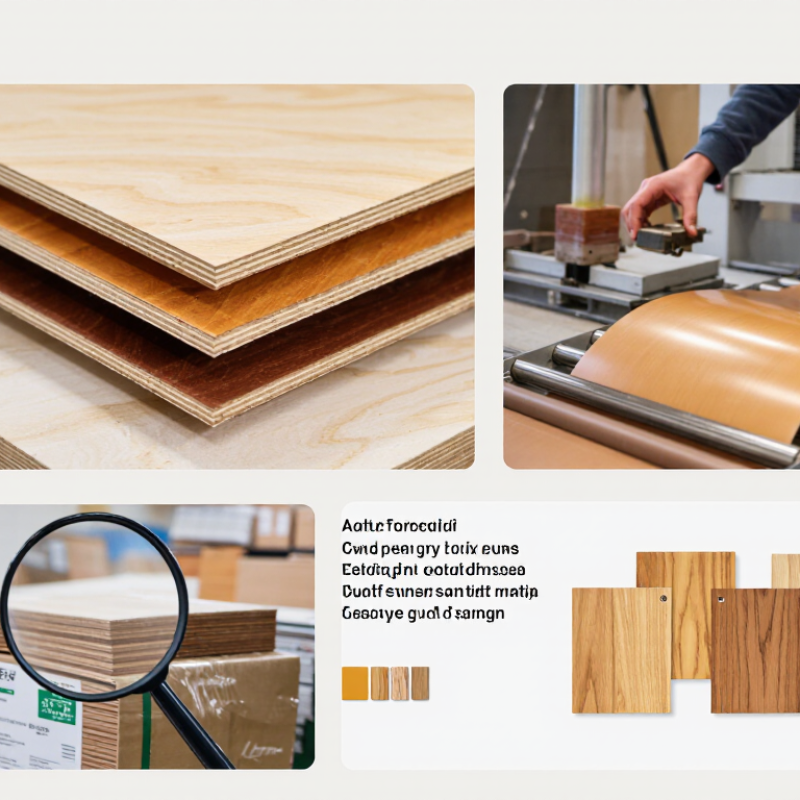
Decorative veneer plywood combines a stable plywood core with a thin layer of natural wood veneer. The face shows real grain, color variation, and occasional knots. It is not printed laminate, although the two materials can look similar at first glance. FAOSTAT’s Forestry Production and Trade database records global plywood output above 170 million cubic metres in 2022, showing the scale of this panel category.
Its structure explains its popularity. Cross-laminated plies improve strength and reduce seasonal movement, while the veneer supplies a refined surface. In practice, installers use it for cabinet doors, wall panels, wardrobes, interior doors, furniture, and hotel interiors. A 1.5 mm face veneer may allow light sanding, but repeated sanding can expose the core. That mistake is common.
Selection still requires judgment. Check veneer matching, core voids, panel flatness, moisture content, and edge quality before ordering. For interior projects, confirm applicable formaldehyde-emission requirements, such as those referenced by the U.S. Environmental Protection Agency’s composite wood regulations. Forest certification may also support responsible sourcing, but certification alone does not prove consistent craftsmanship. Some suppliers publish impressive surface photographs. Photographs cannot reveal internal gaps. Samples, technical datasheets, and third-party test records provide stronger evidence.

Decorative Veneer Plywood: Common Thicknesses and Where It Is Used
Decorative veneer plywood is a plywood panel finished with a natural wood veneer surface, such as oak, walnut, birch, or maple. Common nominal thicknesses range from 3 mm to 21 mm. Thinner panels are often used for wall and ceiling coverings, while thicker panels are suitable for furniture, cabinetry, doors, and interior partitions.
Thickness availability can vary by construction standard, core type, veneer species, and supplier. The values shown represent commonly specified nominal panel thicknesses in decorative plywood applications.
How Decorative Veneer Plywood Is Manufactured in China
China Best Decorative Veneer Plywood Manufacturers?
How Decorative Veneer Plywood Is Manufactured in China
Decorative veneer plywood in China begins with selecting stable core veneers and attractive face materials. Manufacturers inspect logs for grain, color, moisture, and visible defects. After peeling, the thin veneers are clipped into usable sheets. Open knots and damaged sections are removed. Moisture control matters. Kilns reduce moisture before assembly, but excessive drying can make veneer brittle.
Workers arrange the core layers with alternating grain directions. This structure improves strength and limits warping. The face veneer is matched for color and grain continuity. Adhesive is spread across each layer with measured coverage. Pressing uses controlled heat, pressure, and time. These settings vary with panel thickness and adhesive type. After pressing, panels are trimmed, sanded, and inspected. Edges receive close attention.
Quality assurance continues through laboratory and workshop checks. Inspectors examine bonding, thickness, surface flatness, and veneer consistency. They may test moisture content, formaldehyde emissions, and screw-holding performance. Samples are conditioned before testing, which makes results more reliable. A dependable manufacturer should provide clear technical records and production details.
The process is controlled, but it is not flawless. Natural veneer varies from sheet to sheet. A slight shade difference can remain. That imperfection deserves discussion, not concealment. Buyers should confirm core species, surface grade, thickness tolerance, emissions requirements, and packaging conditions before ordering. Clear specifications reduce disputes.
Key Criteria for Evaluating Chinese Plywood Manufacturers
China Best Decorative Veneer Plywood Manufacturers?
Key Criteria for Evaluating Chinese Plywood Manufacturers
Evaluating Chinese decorative veneer plywood manufacturers requires more than comparing online prices. Begin with the factory’s production experience, product range, and technical team. Ask for recent specifications, not generic brochures. A reliable manufacturer should explain veneer species, core construction, thickness tolerance, adhesive type, and surface finishing methods clearly. Details matter.
Request physical samples from different production batches. Check veneer matching, color consistency, open joints, blisters, sanding marks, and edge quality under strong light. Measure thickness at several points with a caliper. Inspect the core for gaps and overlapping layers. A polished sample can mislead. Batch consistency deserves more attention than appearance alone.
Factory verification should include production records, quality-control procedures, moisture testing, and emissions documentation relevant to the destination market. Confirm whether certificates belong to the actual factory and current product. Review packaging carefully: corner protection, moisture barriers, pallet strength, and labeling reduce avoidable damage. Ask how complaints are investigated and corrected. Vague answers are warning signs. Independent pre-shipment inspection adds useful evidence, although it cannot replace a careful supplier audit. Pricing also needs context, because unusually low offers may reflect thinner veneers, weaker cores, or unstable adhesives. Don’t ignore small inconsistencies; they often reveal larger process problems.
China Best Decorative Veneer Plywood Manufacturers? - Key Criteria for Evaluating Chinese Plywood Manufacturers
| Evaluation Dimension | What to Check | Practical Benchmark or Requirement | Relevant Standard or Test | Recommended Evidence |
|---|---|---|---|---|
| Product Construction | Core species, veneer composition, number of plies, cross-banding, and panel balance. | Evenly distributed plies, tight bonding, no visible core gaps, overlaps, delamination, or excessive face checking. | Visual grading; EN 314-1 or equivalent bond-quality testing. | Approved construction drawing, production samples, and third-party inspection photographs. |
| Decorative Face Veneer | Species, cut, thickness, grain matching, color consistency, knots, mineral streaks, and repaired defects. | Face veneer should match the approved reference panel; defects must be defined in a written grading schedule. | Customer-approved visual standard; EN 635 classification may be used where applicable. | Signed color board, sealed control sample, veneer grading sheet, and batch photographs. |
| Panel Thickness | Nominal thickness, actual thickness, tolerance, sanding allowance, and thickness uniformity. | Specify nominal thickness and permitted tolerance before production; measure at multiple points on every inspection sample. | EN 315 or the dimensional requirements specified in the purchase contract. | Calibrated micrometer records and pre-shipment dimensional inspection report. |
| Moisture Content | Moisture level at final inspection and the risk of warping, shrinkage, or surface cracking. | A commonly specified range for interior plywood is approximately 6%–14%, subject to destination climate and contract requirements. | EN 322 or an equivalent oven-dry moisture-content method. | Moisture test records from different areas of the production batch. |
| Bonding Performance | Adhesive type, glue spread, pressing parameters, cure control, and resistance to delamination. | Bond quality should meet the intended service class, such as dry-use or humid-use interior applications. | EN 314-1 and EN 314-2; relevant ASTM methods may also be specified by the buyer. | Adhesive technical data sheet, production-process records, and laboratory bond test results. |
| Formaldehyde Emissions | Emission level of the finished plywood, not only the adhesive specification. | For many European interior applications, E1 is commonly required; EN 717-1 defines E1 as chamber emissions not exceeding 0.124 mg/m³. | EN 717-1, EN 120, ASTM E1333, or the applicable destination-market regulation. | Current accredited laboratory report identifying the tested panel construction and production date. |
| Mechanical Properties | Bending strength, modulus of elasticity, screw holding, and surface hardness where required. | Performance must be matched to the intended use, including furniture, wall panels, doors, or joinery components. | EN 310 for bending strength and modulus of elasticity; project-specific methods may apply. | Independent test report with panel thickness, veneer structure, sampling method, and test direction. |
| Surface Quality and Finish | Sanding uniformity, surface smoothness, open defects, glue marks, press marks, and coating compatibility. | Surface must be suitable for the specified finish, such as clear coating, staining, laminating, or painting. | Visual inspection under agreed lighting and surface-grit specification. | Golden sample, surface inspection checklist, and coating-compatibility sample. |
| Dimensional Stability | Flatness, squareness, edge straightness, warping, and thickness swelling. | Panels should remain flat and square after conditioning and shipment; tolerances must be stated in the purchase specification. | EN 12872 for dimensional changes where applicable; contract-specific flatness checks. | Flatness gauge records, diagonal measurements, and inspection before container loading. |
| Quality Management | Incoming veneer inspection, traceability, process controls, corrective actions, and final inspection. | A documented quality system with batch identification and nonconformity records should be in place. | ISO 9001 certification is useful but should not replace product testing and factory audits. | Quality manual, process-flow chart, audit report, inspection plan, and corrective-action records. |
| Raw-Material Traceability | Veneer origin, species identification, legality documentation, and responsible sourcing controls. | Species and source should be declared accurately and linked to purchase records and production batches. | Applicable timber-legality rules and voluntary chain-of-custody certification where required. | Supplier declarations, purchase invoices, chain-of-custody records, and legality documents. |
| Packaging and Export Readiness | Pallet strength, moisture protection, corner protection, labeling, container loading, and fumigation requirements. | Packaging should prevent abrasion, edge damage, water exposure, and load movement during international transport. | ISPM 15 requirements for regulated solid-wood packaging materials. | Packaging specification, loading photos, carton or pallet labels, and shipping-document checklist. |
| Production Capacity and Lead Time | Capacity for the required species, dimensions, veneer matching, coating, and repeat-order consistency. | Supplier should confirm realistic monthly capacity, sample lead time, production lead time, and peak-season constraints. | Factory audit and production-capacity verification. | Capacity statement, production schedule, machinery list, and evidence from comparable non-branded projects. |
Note: Benchmarks should be confirmed against the destination market, intended application, contract specifications, and an accredited laboratory report before purchase.
Leading Chinese Decorative Veneer Plywood Manufacturers to Compare
When comparing leading Chinese decorative veneer plywood manufacturers, start with production evidence, not catalog photography. FAO’s Forestry Production and Trade database reports China as the world’s largest plywood producer. Its 2023 yearbook, covering 2022, recorded global wood-based panel production near 390 million cubic metres. This scale creates strong sourcing options, but quality still varies between factories.
Ask each manufacturer for recent test reports, veneer species, core composition, and full thickness tolerance. A reliable factory should explain its hot-press temperature, adhesive system, moisture target, and sanding process. Request samples with visible edges. Check whether the face veneer shows bubbling, open joints, color mismatch, or telegraphing from the core. Small defects matter.
Compare compliance with EN 13986, EN 314, or relevant North American emission requirements. Test reports should identify the laboratory, product batch, and testing date. The UNECE/FAO Forest Products Annual Market Review shows continued demand for value-added wood products, while environmental scrutiny is increasing. That makes traceable timber and low-emission adhesives commercially important. However, certification alone is not enough. I have seen attractive panels fail after humidity cycling because the core was uneven. A factory’s corrective-action records may reveal more than its marketing claims. Also compare packaging strength, replacement policy, lead time, and inspection access before placing a large order.
Certifications, Customization, and Export Capabilities of Manufacturers
China Best Decorative Veneer Plywood Manufacturers?
Reliable decorative veneer plywood manufacturers should provide more than attractive product photos. Their certifications should match the product, factory, and export destination. Look for documented FSC chain-of-custody, CARB Phase 2, E1, or other applicable compliance evidence. Always check certificate numbers and validity dates. A polished certificate image is not enough. Ask for recent test reports, factory inspection records, and batch traceability documents.
Customization should be practical, not merely promised. Manufacturers may offer oak, walnut, ash, or other veneer faces, with different grades, thicknesses, core structures, and surface finishes. They should confirm veneer matching, panel dimensions, moisture levels, and tolerance ranges in writing. Small details matter. Request a physical sample before approving mass production. I have found that color can shift under different lighting, while natural knots may look different across batches. This is where specifications sometimes need revision.
Export capability includes careful packaging, stable lead times, and accurate paperwork. Experienced suppliers should explain container loading plans, pallet protection, fumigation requirements, and destination-specific documents. They should also provide clear answers about production capacity during busy seasons. Documentation matters. A dependable manufacturer normally shares inspection photos, packing lists, commercial invoices, and shipment updates without repeated pressure. Still, no supplier is perfect; independent inspection remains sensible for large orders. A useful evaluation combines verified certifications, transparent customization controls, and demonstrated export experience rather than low pricing alone.