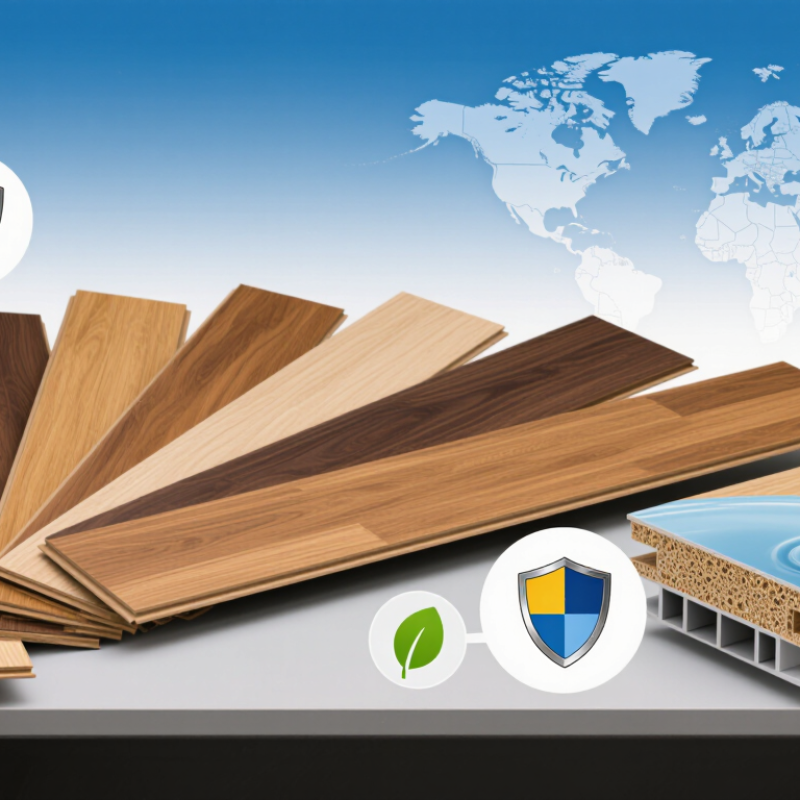
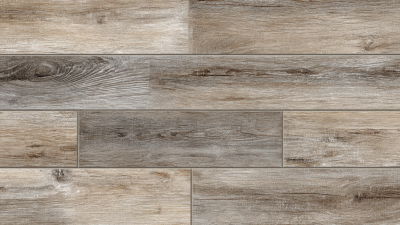
| Product Selection for Global Buyers |
| Rigid-Core SPC Vinyl Plank |
Overall thickness: approximately 4–8 mm
Wear layer: approximately 12–20 mil
Core: stone-plastic composite
|
High dimensional stability and strong resistance to dents. Usually suitable for floating installation over a sound, level subfloor.
|
High-traffic homes, retail areas, offices, entryways, and climates where indentation resistance is important.
|
The rigid core does not eliminate the need for subfloor preparation. Check the product’s permitted temperature range and expansion-joint requirements.
|
| Rigid-Core WPC Vinyl Plank |
Overall thickness: approximately 5–10 mm
Wear layer: approximately 12–20 mil
Core: wood-polymer composite
|
Thicker and more resilient underfoot than many thinner rigid products; generally provides improved acoustic and comfort performance.
|
Bedrooms, living rooms, hospitality interiors, and residential spaces where walking comfort is valued.
|
Confirm the acoustic underlayment requirements. Do not add extra underlayment unless the installation instructions allow it.
|
| Flexible LVT Plank |
Overall thickness: approximately 2–5 mm
Wear layer: approximately 6–20 mil
Core: flexible vinyl construction
|
Conforms more closely to minor subfloor contours than rigid products, but imperfections may telegraph through the surface.
|
Renovations with suitable, well-prepared substrates; glue-down installations; commercial interiors requiring individual plank replacement.
|
Requires especially careful subfloor smoothing. Adhesive selection, open time, and rolling procedures must follow the installation instructions.
|
| Wear-Layer Selection |
6–8 mil: light residential use
12 mil: normal residential and moderate commercial use
20 mil or higher: heavier residential and commercial use
|
A thicker wear layer generally improves resistance to abrasion and visible wear, but it does not prevent all scratches, dents, or damage from dragging furniture.
|
Select according to traffic, footwear, pets, rolling loads, and cleaning frequency.
|
Wear-layer thickness is not the same as total plank thickness. Review the complete product specification before comparing prices.
|
| Surface Finish |
Common finishes include polyurethane or enhanced polyurethane coatings; embossed textures may imitate wood grain.
|
Surface coatings can improve stain resistance and routine cleanability. Texture and gloss influence slip perception and appearance.
|
Homes, offices, retail spaces, and hospitality applications when matched with the expected traffic level.
|
Avoid assuming that a textured or matte surface is automatically slip-resistant. Request tested slip-performance information where regulations require it.
|
| Water Resistance |
Vinyl itself is water-resistant; overall floor performance depends on joints, edges, subfloor, and installation quality.
|
Suitable for many kitchens, bathrooms, and utility areas when the product is approved for those locations and water is not allowed to remain at seams or edges.
|
Moisture-prone residential areas and commercial interiors with normal surface spills.
|
Vinyl plank flooring is not a substitute for a waterproof room system. Follow local wet-area regulations and the product’s perimeter-sealing instructions.
|
| Plank Size and Format |
Common plank widths: approximately 152–305 mm
Common lengths: approximately 900–1,830 mm
|
Wider and longer planks can create a more spacious visual effect but may show subfloor irregularities more clearly.
|
Choose format according to room size, visual design, handling capacity, and installation skill.
|
Order from the same production lot when possible to reduce shade variation. Check carton coverage in both square metres and square feet.
|
| Indoor Air and Material Information |
Look for complete composition information, emissions testing, and applicable regional conformity documentation.
|
Documentation helps buyers compare material transparency and indoor-air performance across markets.
|
Homes, schools, healthcare areas, offices, and projects with formal material-submittal requirements.
|
Verify the testing scope, test method, date, and product identity. A general declaration may not cover every product variation.
|
| Proper Installation Workflow |
| 1. Inspect and Plan |
Inspect cartons, batch information, plank color, locking profiles, and visible defects before installation.
|
Early inspection reduces the risk of installing damaged or mismatched material.
|
All installation types.
|
Retain several spare planks from the installation lot for future repairs. Do not install visibly defective pieces.
|
| 2. Acclimatize the Flooring |
Many products require approximately 24–72 hours in the installation area, but the exact period and temperature range vary by product.
|
Acclimatization allows the planks to adjust to site conditions and can reduce dimensional movement after installation.
|
Especially important where storage and installation temperatures differ significantly.
|
Follow the manufacturer’s stated temperature and humidity limits. Keep cartons flat, dry, and protected from direct sunlight.
|
| 3. Prepare the Subfloor |
The subfloor should be clean, dry, structurally sound, and smooth. Many installation guides limit localized unevenness to about 3 mm over 1.8–2 m, but limits vary.
|
Proper preparation reduces joint stress, visible telegraphing, hollow sounds, and premature wear.
|
Concrete, wood-based panels, and approved existing hard floors.
|
Repair cracks, remove loose materials, check moisture, and correct high or low areas according to the installation instructions.
|
| 4. Control Moisture |
Moisture limits depend on the subfloor, flooring type, adhesive, and local standard. Concrete must be tested before installation.
|
Moisture testing helps prevent adhesive failure, mold-related problems, dimensional movement, and damage to the subfloor.
|
Ground-level rooms, basements, newly poured concrete, and humid climates.
|
Do not rely on visual dryness. Use the test method specified for the project and correct moisture problems before installation.
|
| 5. Select Installation Method |
Floating click: fast and replaceable
Glue-down: stable and suitable for many commercial layouts
Peel-and-stick: requires a very smooth, clean substrate
|
Each method has different requirements for subfloor preparation, movement, adhesive, and repair.
|
Select according to room size, traffic, substrate, moisture conditions, and local installation practice.
|
Never mix installation methods unless the product system specifically permits it. Follow expansion, perimeter, and transition details.
|
| 6. Lay Out the Planks |
Stagger end joints; a common minimum is approximately 150–300 mm, depending on the product instructions.
|
Correct staggering improves appearance and reduces concentrated stress at plank ends.
|
All plank patterns.
|
Avoid very short end pieces and alignments that create repeating “H” or stair-step patterns unless intentionally designed.
|
| 7. Allow Movement and Finish Edges |
Floating floors commonly require a perimeter gap, often around 5–10 mm, but the exact dimension depends on product and room conditions.
|
Movement gaps help accommodate thermal expansion and contraction.
|
Floating installations near walls, columns, cabinets, and fixed objects.
|
Do not trap a floating floor beneath fixed cabinetry unless the installation instructions specifically allow it. Use suitable transitions at doorways and between floor types.
|
| Maintenance and Replacement Guide |
| Daily or Routine Cleaning |
Remove loose dirt with a soft broom, dust mop, or vacuum suitable for hard floors.
|
Regular dry cleaning reduces abrasive particles that can dull the finish.
|
All vinyl plank flooring.
|
Use vacuum equipment without a beater bar unless the flooring instructions expressly permit it.
|
| Damp Mopping |
Use a well-wrung microfiber mop and a diluted, neutral-pH cleaner approved for resilient flooring.
|
Removes ordinary soil without leaving excessive water or residue.
|
Weekly or as needed, depending on traffic and soil levels.
|
Do not flood the floor. Avoid abrasive powders, solvent-based products, wax, polish, and steam cleaning unless specifically approved.
|
| Spill and Stain Response |
Wipe spills promptly with a clean, absorbent cloth. Use the mildest cleaner that removes the contamination.
|
Fast response reduces the chance of staining at embossed texture, joints, or edge details.
|
Kitchens, dining areas, entrances, and commercial spaces.
|
Avoid steel wool, harsh scouring pads, strong solvents, and prolonged contact with rubber or bitumen-based materials.
|
| Furniture and Traffic Protection |
Use non-staining protective pads, lift furniture instead of dragging it, and place walk-off mats at entrances.
|
Helps prevent scratches, dents, and tracked-in grit.
|
All residential and commercial environments.
|
Avoid rubber-backed mats unless confirmed compatible. Replace damaged pads and keep caster wheels clean.
|
| Replacing a Click-Lock Plank |
Remove skirting or transition components as needed, unlock planks from the nearest wall, replace the damaged piece, and reinstall the floor.
|
Floating systems are generally easier to repair without removing adhesive.
|
Localized damage in residential and light commercial areas.
|
Keep replacement planks from the original lot because color and embossing can vary between production runs.
|
| Replacing a Glue-Down Plank |
Cut and remove the damaged plank, remove adhesive residue, apply compatible adhesive, install the replacement, and roll it as specified.
|
A properly bonded repair restores surface continuity without disturbing adjacent planks.
|
Glue-down residential and commercial installations.
|
Confirm adhesive compatibility, working time, temperature, and required rolling pressure. Avoid cutting into the substrate.
|
| Replacement Timing |
Replace planks when damage is deep, edges are lifting, joints no longer close, or cleaning cannot restore the surface.
|
Prompt replacement limits trip hazards and prevents moisture or dirt from entering damaged joints.
|
Areas with concentrated damage or recurring moisture exposure.
|
Investigate the cause before replacing the plank, such as subfloor movement, excessive moisture, furniture loads, or installation gaps.
|
| Expected Service Considerations |
Actual service life varies with wear layer, traffic, installation quality, sunlight, cleaning, furniture loads, and moisture exposure.
|
A higher specification does not compensate for poor subfloor preparation or unsuitable maintenance.
|
Use the complete project specification rather than relying on thickness alone.
|
Compare technical sheets, installation instructions, test documentation, carton coverage, spare-plank availability, and local compliance requirements.
|